Table of Contents
Introduction
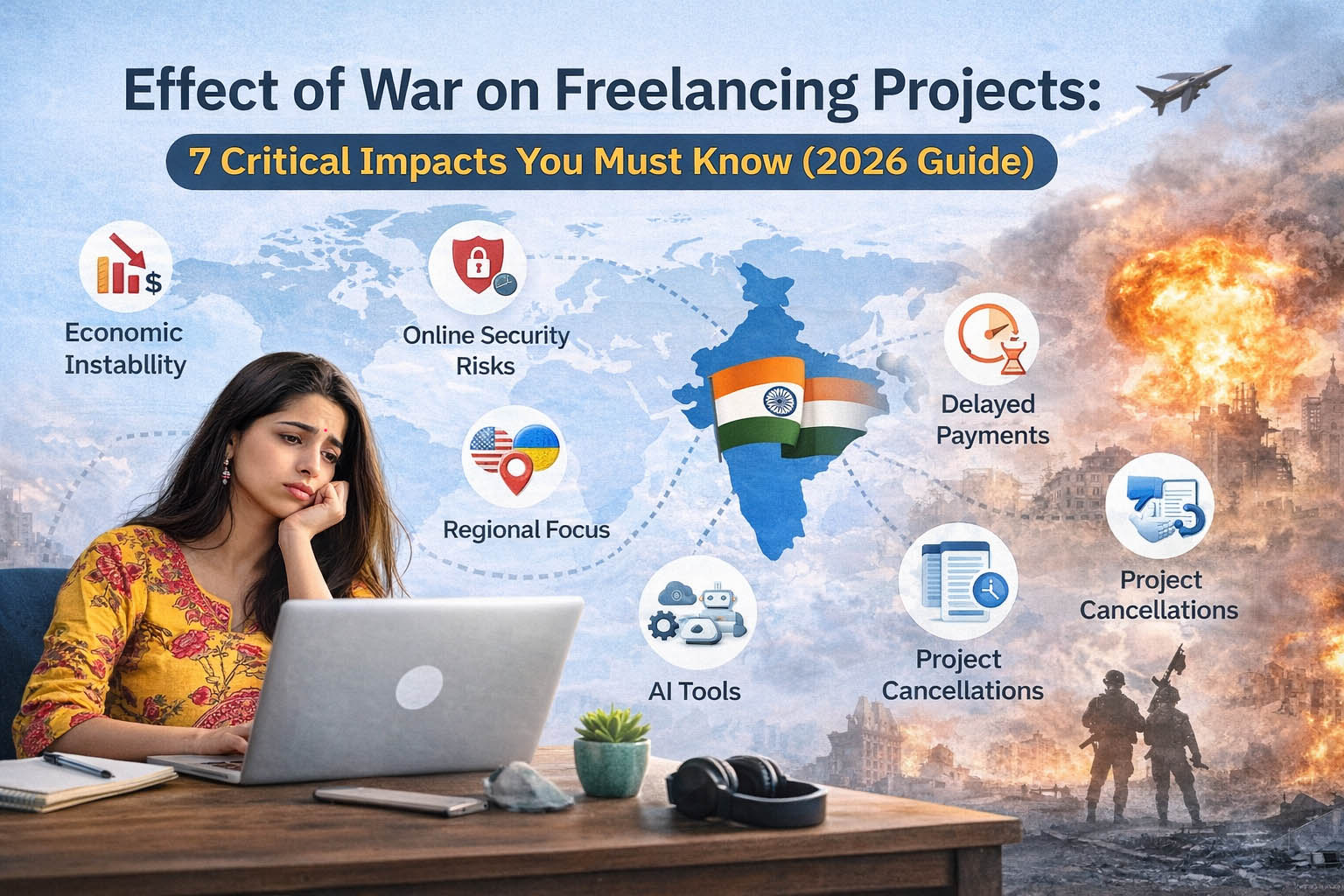
The effect of war on freelancing projects is becoming a major concern in today’s global digital economy. As geopolitical tensions rise, businesses across the world adjust their spending, hiring, and operational strategies—directly impacting freelancers.
Understanding the effect of war on freelancing projects can help professionals prepare for uncertainty and identify new growth opportunities in changing markets.
Effect of War on Freelancing Projects in 2026
The effect of war on freelancing projects in 2026 is shaped by economic slowdown, shifting priorities, and rapid digital transformation. While some industries decline, others see unexpected growth.
1. Decline in Client Spending and Budget Cuts
During wartime, companies focus on survival rather than expansion.
Impact:
- Fewer freelance projects
- Reduced budgets
- Delayed hiring decisions
According to the World Bank, global economic uncertainty significantly impacts hiring and outsourcing trends.
2. Shift in Freelance Market Demand
The effect of war on freelancing projects also includes a major shift in demand.
High-Demand Skills:
- Cybersecurity
- AI & automation
- Content writing (news, crisis communication)
- SaaS development
Declining Niches:
- Travel industry content
- Luxury branding
- Event-based services
Freelancers who pivot quickly can benefit from these demand shifts.
3. Currency Fluctuations and Payment Risks
Wars often cause unstable currencies and financial restrictions.
Effects:
- Exchange rate fluctuations
- Payment delays
- Increased transaction risks
Platforms like Payoneer and Wise help freelancers manage international payments efficiently.
4. Increased Competition in Freelancing
As layoffs increase globally, more professionals turn to freelancing.
Results:
- Higher competition on platforms like Upwork and Fiverr
- Price undercutting
- Reduced visibility for beginners
This is a major effect of war on freelancing projects, making personal branding essential.
5. Rise of Remote Work and Global Hiring
Despite challenges, wars accelerate remote work adoption.
Opportunities:
- More companies hiring globally
- Growth in freelance contracts
- Increased demand for remote talent
You can explore opportunities on platforms like Freelance Bharat to connect with relevant clients.
6. Project Delays and Uncertainty
Even ongoing projects face instability.
Challenges:
- Scope changes
- Delayed payments
- Contract cancellations
Freelancers must maintain flexibility and diversify income streams.
7. Opportunities for Indian Freelancers
India remains a strong outsourcing hub during global conflicts.
Advantages:
- Cost-effective services
- Skilled workforce
- Stable infrastructure
Freelancers can leverage platforms like Freelance Bharat to access India-focused opportunities and reduce global competition pressure.
How to Adapt and Thrive During War
1. Diversify Clients
Work with clients across different countries.
2. Learn High-Demand Skills
Focus on AI, cybersecurity, and automation.
3. Build a Strong Personal Brand
Use LinkedIn and blogs to build authority.
4. Offer Flexible Pricing
Create packages and retainers.
5. Maintain Emergency Funds
Prepare for income fluctuations.
Future of Freelancing During Global Conflicts
The effect of war on freelancing projects may cause short-term disruptions, but long-term growth remains strong.
In the coming years:
- Remote work will dominate hiring
- Freelancers will replace many full-time roles
- Demand for digital services will rise
Freelancing is evolving—not declining.
FAQs
Does war reduce freelancing opportunities?
Yes, in some sectors. However, others experience growth.
Which skills are in demand?
Cybersecurity, AI, automation, and content writing.
Is freelancing stable during conflicts?
Short-term instability, but strong long-term potential.
How can Indian freelancers benefit?
By offering competitive pricing and leveraging local platforms.